Column
How to Read an Umeboshi Label: Traditional or Seasoned, and How Salty
The name, ingredients and salt equivalent on the back of the package tell you whether umeboshi are traditional or seasoned, and how salty they are.
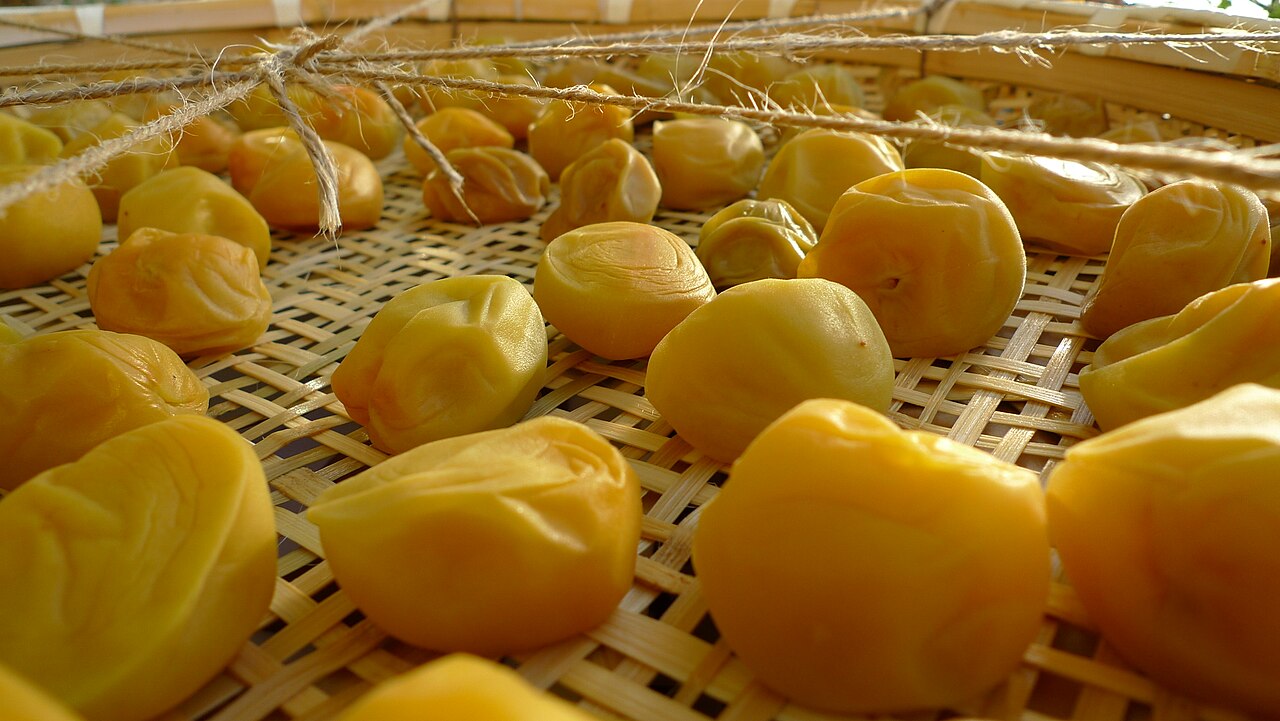
The back of an umeboshi package tells you a lot. Look at three places: the name, the ingredients and the nutrition label.
1. The name (名称) tells you traditional or seasoned
Under Japan's food labelling rules, umeboshi are named in the "名称" (name) box as follows.
- 梅干 (umeboshi): salted ume that have been dried.
- 調味梅干 (seasoned umeboshi): umeboshi soaked in a liquid with sugars, vinegar, ume vinegar, spices and so on (or seasoned salted ume that have been dried). Honey umeboshi and bonito umeboshi are usually in this group.
Products made with small ume are labelled 小梅干 or 調味小梅干.
2. The ingredients (原材料名) tell you the taste
- Only ume and salt (梅・食塩): the traditional taste, just salt and the sourness of ume.
- With red shiso (しそ / 赤じそ): red colour and the aroma of shiso.
- With honey (はちみつ), sugars or bonito flakes (かつお節): a milder taste with sweetness or umami.
3. Compare salt with "食塩相当量" on the nutrition label
Packaged processed foods in Japan must show energy, protein, fat, carbohydrate and salt equivalent (食塩相当量). Use this salt equivalent to compare umeboshi, and check what amount it refers to (per 100 g, per piece and so on).
For reference, the Standard Tables of Food Composition in Japan give these salt equivalents per 100 g of edible part:
| Type | Salt equivalent (per 100 g) |
|---|---|
| Umeboshi, salted (塩漬) | 18.2 g |
| Umeboshi, seasoned (調味漬) | 7.6 g |
Products vary a lot, so check the package for the actual amount.
Tips for choosing
- Watching your salt? Pick a product with a low 食塩相当量.
- Want the original taste? Choose 梅干 with only ume and salt (and shiso) in the ingredients.
- Not a fan of sourness? Start with a 調味梅干 seasoned with honey.
- Do not give honey or foods containing honey to babies under one year old (Ministry of Health, Labour and Welfare, Japan).
Try our 3-question finder and the product filters (no additives, low salt, salt %).
Products related to this article