Column (Last updated )
Top Ume Blossom Spots Accessible from the Kansai Area
From urban spots like Osaka Castle and Kitano Tenmangu to vast orchards like Tsukigase and Minabe Bairin. Here are 9 top ume spots reachable from Kyoto, Osaka, and Kobe, complete with blooming periods, tree counts, admission fees, and access details.
Here are notable ume spots accessible from bases in Kyoto, Osaka, and Kobe, organized into three categories: "Easy City Visits," "Half-Day to Full-Day Trips by Train or Bus," and "Longer Excursions." Details on tree counts, peak seasons, admission fees, and access directions are summarized from our spot pages. Blooming periods are typical yearly averages and fluctuate based on weather. Please check each official site's blooming updates and train transit planners before heading out.
When to Visit
- Early February onward: Early-blooming spots like Osaka Castle Park Plum Grove, Kitano Tenmangu, and Minabe Bairin.
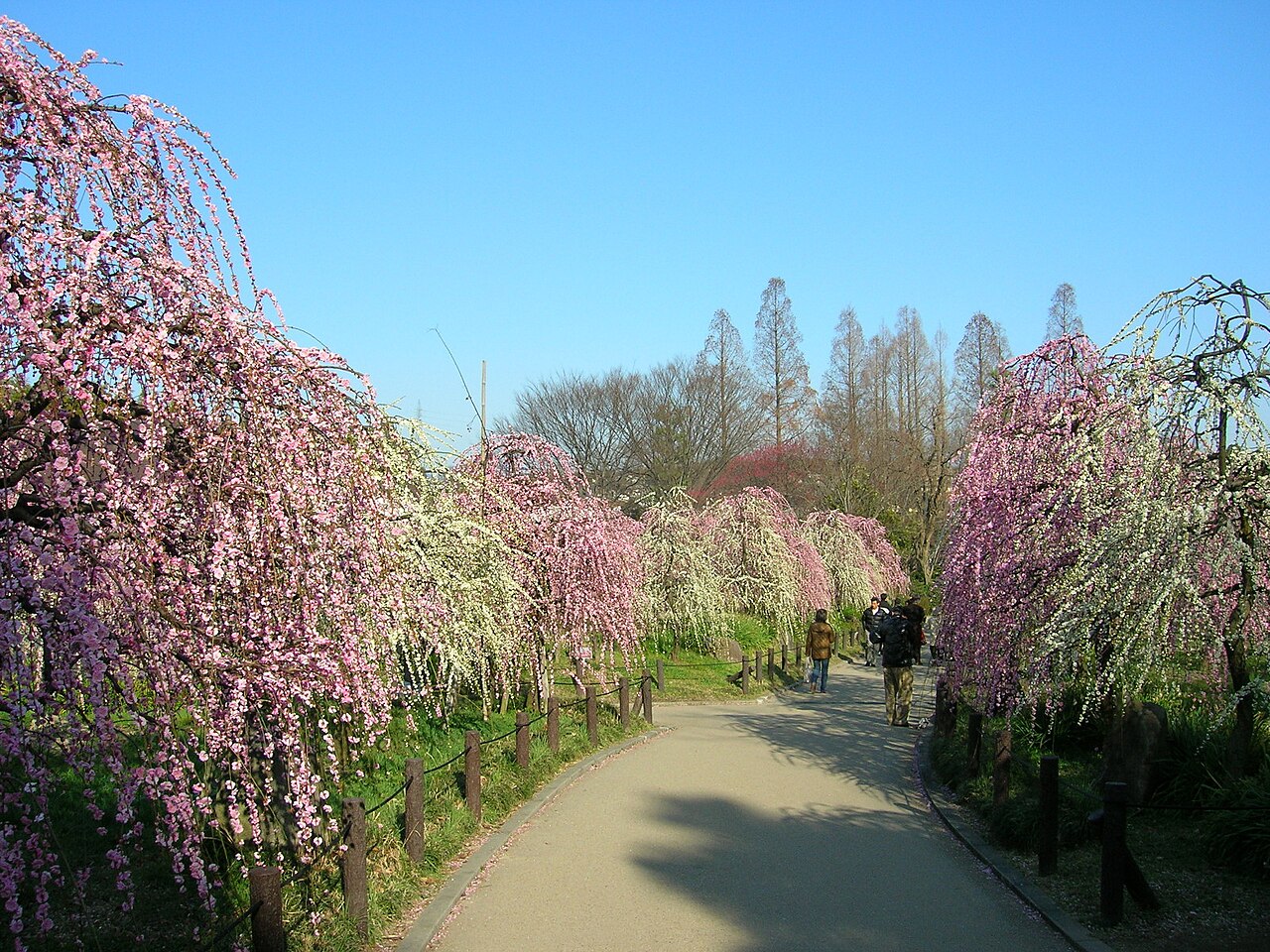
- Late February to early March: Peak season for weeping ume at Jonangu, Ayabeyama Bairin, Sekai no Ume Koen, and more.
- March: Later-blooming destinations, including Tsukigase Bairin in Nara, Hikone Castle Plum Grove, and Suzuka Forest Garden in Mie.
| Spot | Approx. Trees | Typical Peak | Admission |
|---|---|---|---|
| Osaka Castle Park Plum Grove | 1,270 | Early Feb – early Mar | Free |
| Kitano Tenmangu | 1,500 | Early Feb – late Mar | Fee for Plum Garden (¥3,000 for adults in 2026) |
| Jonangu | 150 | Late Feb – mid-Mar | Garden fee during festival: ¥1,000 for adults |
| Tsukigase Bairin | 10,000 | Late Feb – late Mar | — |
| Minabe Bairin | 80,000 | Early Feb – late Feb | Adults ¥500 |
| Ayabeyama Bairin | — | Late Feb – early Mar | Adults ¥500 |
| Sekai no Ume Koen | 1,200 | Mid-Feb – late Mar | ¥400 for high school age and older during viewing season |
| Hikone Castle Plum Grove | 400 | Mid-March | — |
| Suzuka Forest Garden | 200 | Around early March | ¥700–¥2,000 (varies by bloom status) |
"—" indicates information not yet confirmed.
Easy City Visits
Osaka Castle Park Plum Grove (Osaka City)
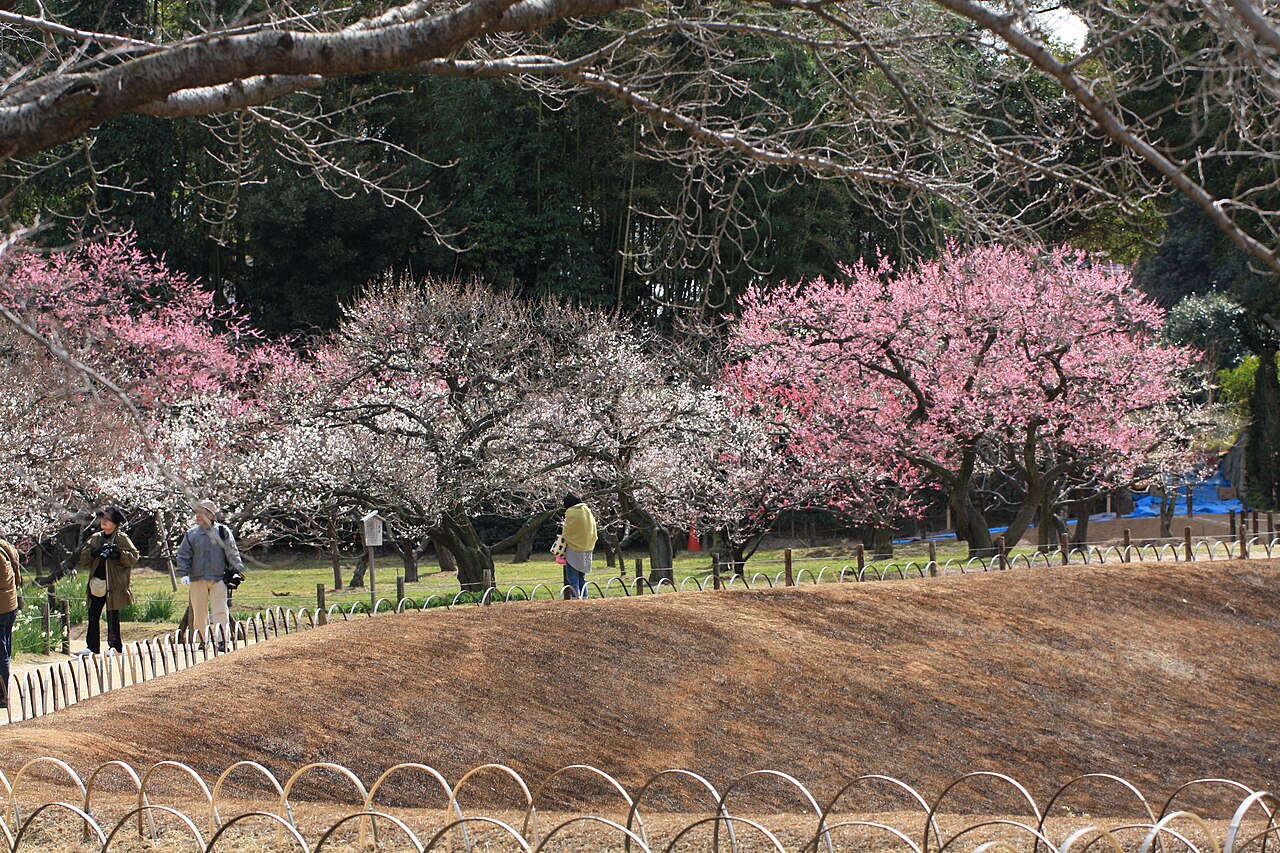
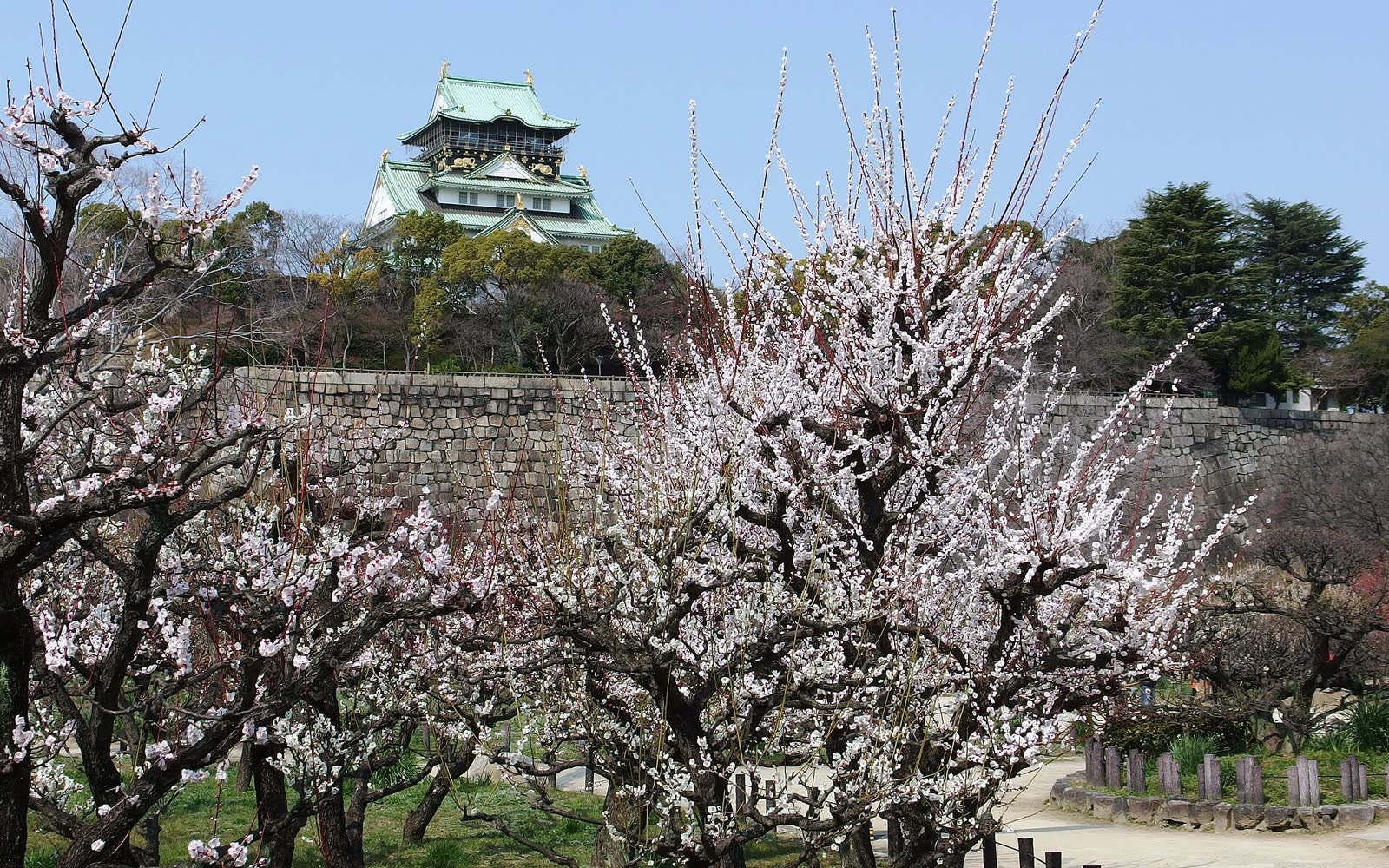
Framed against the Osaka Castle keep, this grove features roughly 1,270 trees across around 100 varieties. Because early and late varieties bloom in succession, you can enjoy flowers over an extended window from early February to early March. Admission is free. Walkable from Morinomiya and Osakajokoen Stations on the JR Loop Line, as well as Morinomiya Station on the Osaka Metro Chuo Line.
Kitano Tenmangu (Kyoto City)
Dedicated to Sugawara no Michizane, a historical figure deeply fond of ume, the shrine grounds feature about 1,500 ume trees. Every year on February 25, the Baikasai (Plum Blossom Festival) includes an outdoor tea ceremony hosted by geiko and maiko from the Kamishichiken district (scheduled for February 25 in 2027 as well). The "Hana no Niwa" plum garden charges admission, which was ¥3,000 on the day for adults in 2026. Accessible via a 5-minute walk from Kitano-Hakubaicho Station on the Keifuku Electric Railroad (Randen), or about 35 minutes by Kyoto City Bus route 50 from JR Kyoto Station.
Jonangu (Kyoto City)
In the "Haru no Yama" (Spring Mountain) garden stretching west of the shrine buildings, around 150 weeping ume trees burst into soft pink, deep red, and white blossoms. The 2027 "Weeping Ume and Camellia Festival" is scheduled for February 18 to March 22, with garden admission during the festival set at ¥1,000 for adults. About a 15-minute walk from Takeda Station on the subway and Kintetsu lines.
Half-Day to Full-Day Trips by Train or Bus
Tsukigase Bairin (Nara City)
Stretching along the Nabari River gorge with roughly 10,000 ume trees, this is one of the earliest plum groves in Japan designated as a Place of Scenic Beauty. It boasts a rich history tied to the production of ubai (smoked ume used for dye and medicine). While it requires a roughly 80-minute Nara Kotsu bus ride from JR or Kintetsu Nara Station, its peak season falls relatively late—from late February through late March—making it a wonderful excursion even after urban ume have finished blooming.
Ayabeyama Bairin (Tatsuno City, Hyogo Prefecture)
An extensive ume grove spread across hills overlooking the Seto Inland Sea. Official notices report that trees typically reach half-bloom in mid-February and full bloom from late February to early March. Admission is ¥500 for adults. Accessible via a 10-minute bus ride from in front of Aboshi Station on the Sanyo Electric Railway (special shuttle buses operate during the blooming season).
Sekai no Ume Koen (Tatsuno City, Hyogo Prefecture)
Home to roughly 1,200 ume trees across more than 300 varieties gathered from around the world, this park offers panoramic views of the Seto Inland Sea from its summit. Admission during the viewing season is ¥400 for high school students and above. It is located close to Ayabeyama Bairin in Mitsu-cho Kurosaki, Tatsuno City.
Hikone Castle Plum Grove (Hikone City, Shiga Prefecture)
Planted on the grounds where rice storehouses stood during the Edo period, this grove features about 400 red and white ume trees. Peak season is mid-March. It makes for an ideal stop after touring the castle keep, designated a National Treasure.
Longer Excursions
Minabe Bairin (Minabe Town, Wakayama Prefecture)
Sprawling through the mountains of Kishu Minabe—renowned for ume production—this orchard is celebrated with the phrase "a million trees in a single glance, fragrance across ten leagues." The sight of hills blanketed in white Nanko ume blossoms is breathtaking. In 2026, the grounds were open from January 31 to March 1 (opening scheduled from late January for 2027). Admission is ¥500 for adults. About 6 minutes by car from Minabe IC on the Hanwa Expressway, with temporary buses running during the open period. An overnight trip combining umeboshi farm stands and local ume cuisine is highly recommended.
Suzuka Forest Garden (Suzuka City, Mie Prefecture)
A research and cultivation garden dedicated to preserving grafting and training techniques for weeping ume. Around 200 celebrated master trees, centered on Kureha weeping ume, open to the public during blooming season. The 2027 "Weeping Ume Festival" is scheduled for February 20 to March 20 (the 2026 public opening ran from February 21 to March 16). Admission fees range from ¥700 to ¥2,000 depending on flowering conditions. Located roughly 3 km from Suzuka IC on the Higashi-Meihan Expressway, with temporary buses running from Yokkaichi Station during the event period.
Related Pages
Compare typical peak seasons for each spot on our Bloom Calendar. Find ume festival schedules under Ume Festivals, and explore locations around the capital in Top Ume Blossom Spots Accessible from Tokyo. If you are visiting for the first time, take a look at our Beginner's Guide to Ume Blossom Viewing.