Culture & History
Tenjin-sama and Ume: The Legend of the Flying Plum, the Plum Blossom Festival, and Tenmangu as a Renowned Plum Spot
Why is Sugawara no Michizane, the god of learning, associated with ume (Japanese plums)? We summarize the famous poem 'If the East Wind Blows,' the 'Flying Plum' that traveled overnight, the Plum Blossom Festival on February 25, and how Tenmangu shrines became famous plum spots.
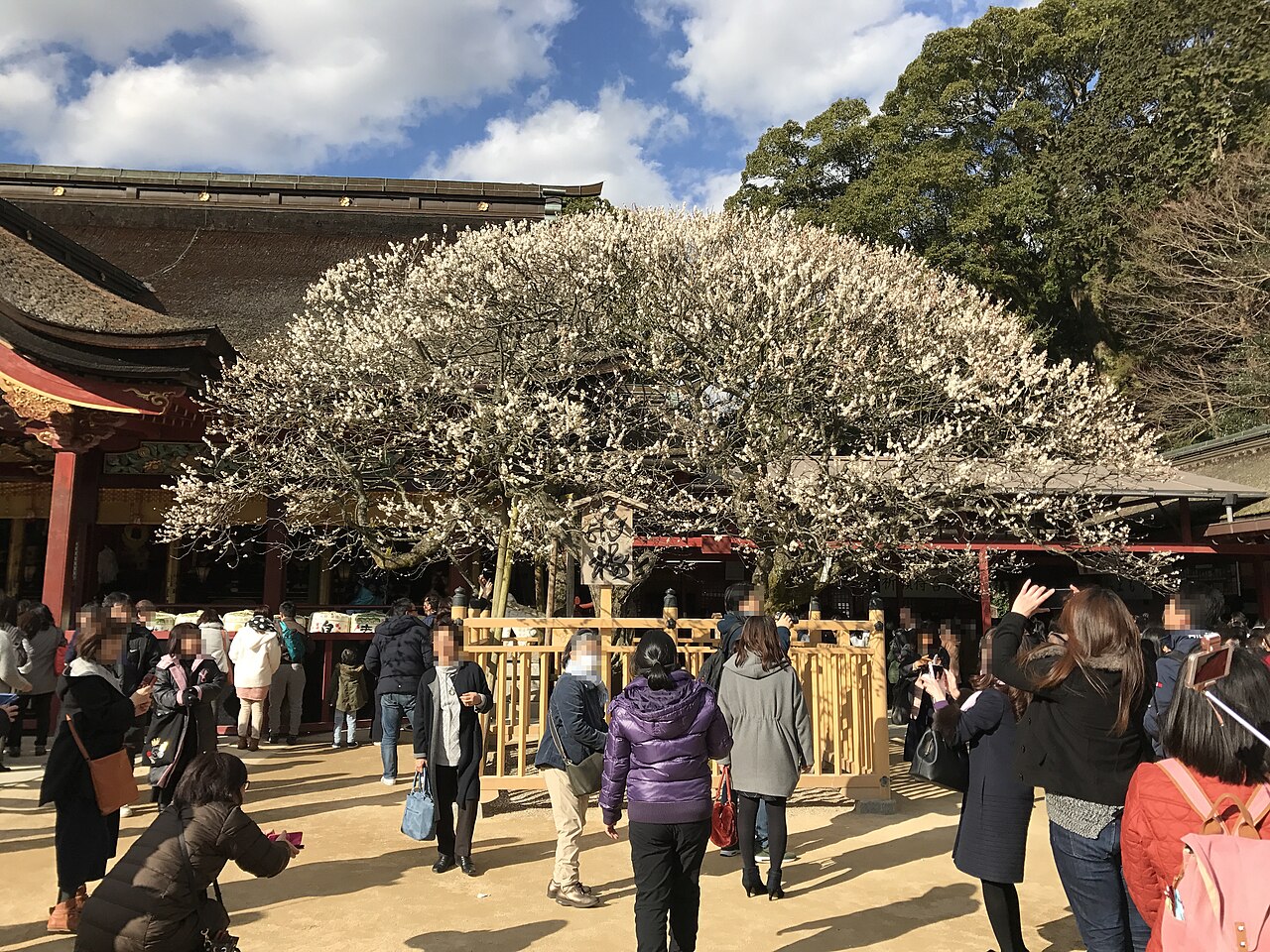
Sugawara no Michizane (845–903), known as "Tenjin-sama," the god of learning, is said to have loved the ume blossom. This is why many Tenmangu and Tenjin shrines are renowned for their ume. Before you go on a ume viewing trip, here is a summary of the connection between Tenjin-sama and ume that you might enjoy knowing.
The Poem Michizane Wrote About Ume
Ume were introduced to Japan from China during the Nara period, and cultivating ume to admire their blossoms was a refined pastime for people in the capital at that time. Michizane, who was both a poet and a scholar, was one of those who deeply loved ume.
It is said that when Michizane was transferred from Kyoto to Dazaifu (present-day Dazaifu City, Fukuoka Prefecture), he composed a poem addressed to the ume in his garden before leaving the capital.
If the east wind blows, please send your fragrance, O ume blossom. Do not forget spring just because your master is gone.
This poem means: "When the spring east wind blows, please deliver your fragrance. Even though your master is gone, please do not forget spring."
The "Flying Plum" That Traveled Overnight
According to legend, the ume, longing for its master, flew to Dazaifu overnight and came to be called "Tobi-ume" (Flying Plum). The ume tree in front of the main hall at Dazaifu Tenmangu is said to be this Flying Plum.
This story is also recorded in the history of Kitano Tenmangu. According to Kitano Tenmangu, old shrine records state that on February 27 of the 7th year of the Enki era (907), the ume from Michizane's residence, the "Kobaiden" (Red Plum Hall), flew to Anrak-ji in Dazaifu (Michizane's burial site).
The Origin of Ume-ga-ebi Mochi
There is also a legend about Michizane regarding "Ume-ga-ebi Mochi," a famous local specialty in Dazaifu. It is said that a kind old woman brought rice cakes skewered on ume branches to Michizane, who was struggling financially in Dazaifu. Today's Ume-ga-ebi Mochi are rice cakes filled with sweet bean paste, with the shape of a ume blossom stamped on the surface.
The Plum Blossom Festival
Tenmangu shrines hold a "Baikasai" (Plum Blossom Festival) during the ume season.
- Kitano Tenmangu: Held every year on February 25. A "Baikasai Nodate Daiso" (Plum Blossom Festival Field Tea Ceremony) is also held. → Kitano Tenmangu Plum Blossom Festival 2027
- Dazaifu Tenmangu: In addition to the Plum Blossom Festival, where miko (shrine maidens) dance holding ume branches, there are several other events related to ume, such as the spring "Sakusui no Utage" (Flowing Cup Banquet).
Visiting the Ume at Tenmangu
| Tenmangu | Number of Ume | Estimated Blooming Period |
|---|---|---|
| Dazaifu Tenmangu (Fukuoka Pref.) | Approx. 200 varieties, 6,000 trees | Late January to early March |
| Kitano Tenmangu (Kyoto Pref.) | Approx. 50 varieties, 1,500 trees | From after New Year's to late March (The Ume Garden is typically open from early February to late March) |
In Dazaifu, ume are not only a feature of Tenmangu but also a symbol of Dazaifu City and Fukuoka Prefecture, with ume trees planted in the front yards of houses throughout the town.
In Tokyo, there is Yushima Tenjin, known for its ume festival. In Kagoshima Prefecture, Fujikawa Tenjin has a ume grove of "Garyu-ume" (Reclining Dragon Plum), which is said to have grown from a ume planted by Michizane himself. Please refer to the pages for each spot for the best time to view and directions.
The blooming period varies from year to year. Before you go, please check the Bloom Report and the information provided by each Tenmangu shrine.