Column
Plum Blossoms and Hiking: 7 Routes from Plum Grove to Trail
Takao Baigo, Mount Makuyama in Yugawara, Mount Otakatori in Ogose, Mount Hodo, Mount Tsukuba, Hirohashi and Soga: seven places to enjoy a plum grove and a hike in one day, with distances and times from local municipalities and tourism associations.
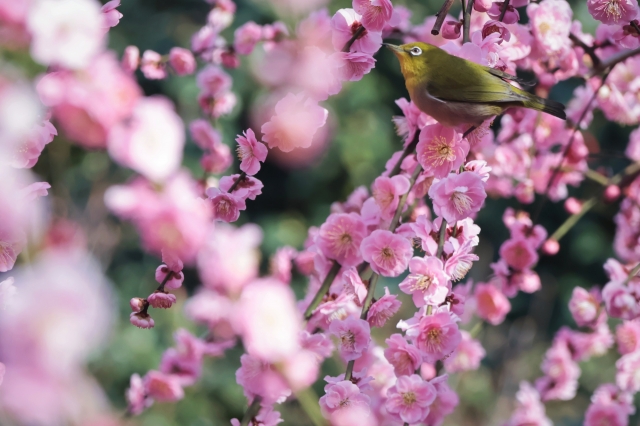
After the plum grove, straight onto the trail. Several famous plum spots double as trailheads, and February and March, the blossom season, are comfortable months for walking without working up too much of a sweat. Here are seven places where you can enjoy a plum grove and a hike in one day. Distances and times are the guidelines published by the local municipalities and tourism associations.
Before you go
- In February and March, snow or ice may linger in the shade on mountain paths. Wear shoes with good grip.
- Many plum groves sit among farmers' fields and residential lanes. Stay out of the orchards and walk in single file.
- Some places have few buses. Check the time of your return bus before you set off.
| Plum grove | Example walk | Best time for plums |
|---|---|---|
| Takao Baigo | Link the eight groves on foot (about 1 hr 30 min one way) | Mid-Feb to mid-Mar |
| Yugawara Plum Grove | From the grove to the summit of Mount Makuyama (626 m) | Early Feb to mid-Mar |
| Ogose Plum Grove | Loop from Ogose Station via the grove and Mount Otakatori (376 m) (12.6 km, about 3 hr 30 min) | Mid-Feb to late Mar |
| Hodosan Ume Hyakkaen | Up to the plum garden on the 497 m summit | Feb to Mar |
| Mount Tsukuba Plum Grove | From Tsukubasan Shrine to Miyukigahara (2.1 km, about 90 min) | Mid-Feb to mid-Mar |
| Hirohashi Plum Grove | Bairin Manki course (about 2.5 km one way, about 40 min) | Late Feb to late Mar |
| Soga Plum Grove | Guided hiking tour during the plum festival | Early to late Feb |
Takao Baigo (Hachioji, Tokyo): linking the groves on foot
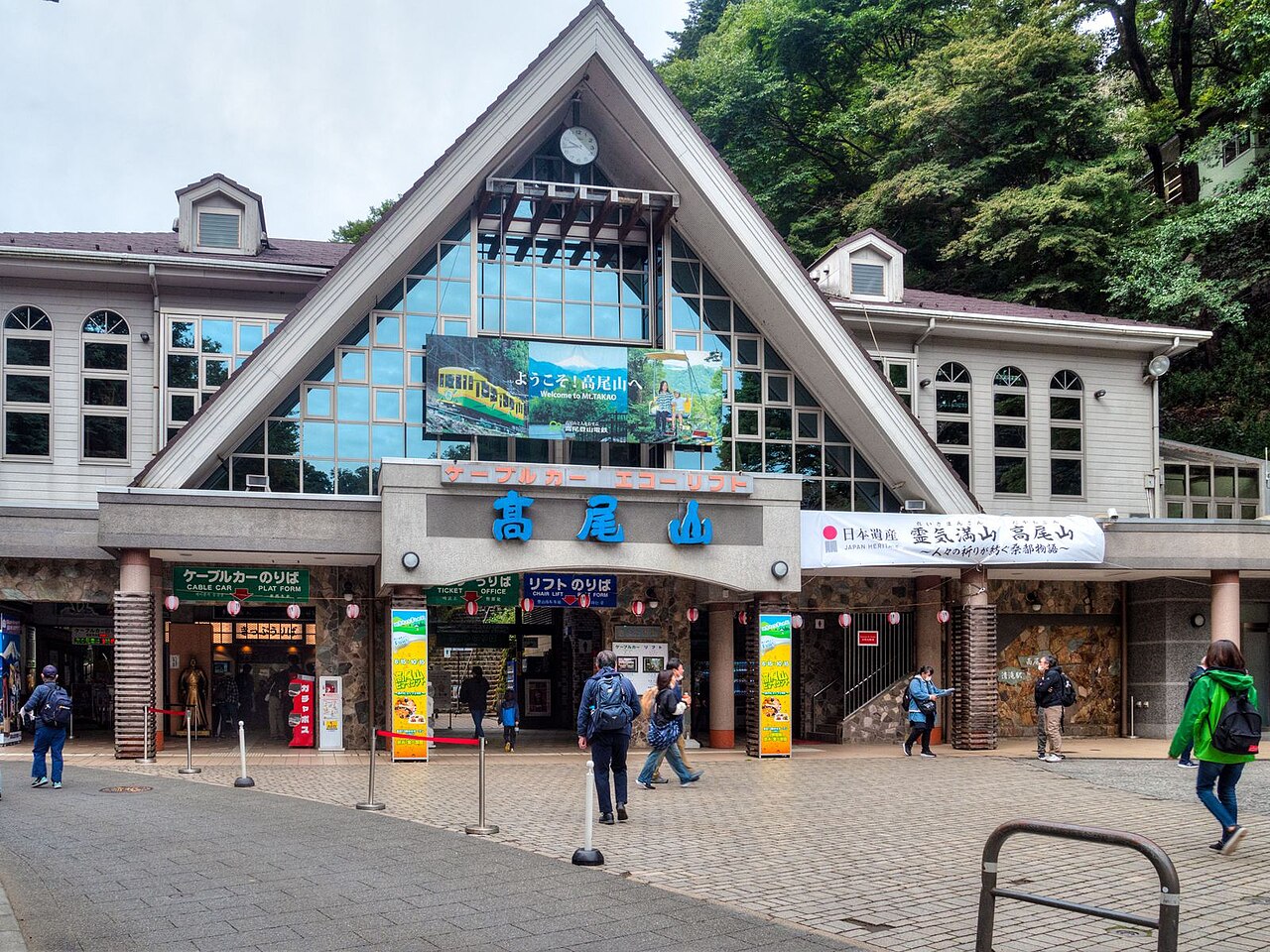
North of Takao Station, eight plum groves are dotted along about 4.5 km of the Kobotoke River and the old Koshu Kaido road, with about 10,000 ume trees in all. Walking all of them takes about an hour and a half one way. Most people start at Yuhodo Bairin, about 10 minutes on foot from Takaosanguchi Station on the Keio Line, and continue to Sekisho Bairin, Tenjin Bairin and Yunohana Bairin.
The road in front of Yunohana Bairin is also the start of the "Jataki course" up Mount Takao, so you can climb Mount Takao after the plums. The innermost grove, Kogesawa Bairin, is a large grove of about 1,400 trees that opens only at its peak in early to mid-March, with paths through the grove. You can return to Takao Station by bus from "Kobotoke".
In 2026 the 47th Takao Baigo Plum Festival was held on March 14 and 15, with a stamp hike around the groves. There is no parking at the groves, so come by train and bus.
→ More about Takao Baigo (best time, access, map)
Yugawara Plum Grove (Yugawara, Kanagawa): from the grove to the summit of Mount Makuyama
Mount Makuyama is a 626 m peak formed by an eruption of the Hakone volcano about 150,000 years ago, and one of the sites of the Hakone Geopark. About 4,000 ume trees of 28 varieties grow at its foot, and from the highest point of the grove you look down on a slope that seems carpeted with red and white flowers.
Yugawara Town suggests that confident walkers follow the hiking trail from the grove up to the summit, which looks out over Sagami Bay. The columnar-jointed rock face of the mountain is also known as a rock-climbing practice ground.
Take a bus bound for Makuyama Park from JR Yugawara Station and get off at the terminus, about 15 minutes. Ume no Utage 2027 is planned for February 6 to March 7. After the walk you can stop at a Yugawara hot spring.
→ More about Yugawara Plum Grove (best time, access, map)
Ogose Plum Grove (Ogose, Saitama): the grove, Mount Otakatori and Katsuragi Kannon
In 2016 Ogose became the first town in Japan to declare itself a "hiking town", and it publishes a recommended course for each month. The "Otakatori viewpoint course" in the town's hiking guidebook runs from Ogose Station to Ogose Plum Grove (about 50 minutes), Mount Otakatori at 376 m (about 65 minutes), Katsuragi Kannon (about 20 minutes) and the Yu Park Ogose hot spring (about 35 minutes) before returning to the station: 12.6 km in about 3 hours 30 minutes. From the viewpoint in front of Katsuragi Kannon you can reportedly see as far as Tokyo Skytree on clear days.
For an easier walk, the same guidebook's March recommendation, the "Ogose Plum Grove course", is 6.2 km and about an hour and a half. The guidebook is several years old and the town notes that some sections have become hard to pass, so check the town's latest information before you go.
→ More about Ogose Plum Grove (best time, access, map)
Hodosan Ume Hyakkaen (Nagatoro, Saitama): up to the summit plum garden
A plum garden on the summit of Mount Hodo (497 m) in Nagatoro, with about 470 ume trees of some 170 varieties. From the early-blooming Toji and Kankobai to the "three famous moon plums" Mangetsu, Tagoto no Tsuki and Somei no Tsuki, it has one of the largest variety collections in the Kanto region.
It is about 25 minutes from Nagatoro Station on the Chichibu Railway by a combination of walking and the ropeway, which covers the 832 m from the foot station to the summit station in about five minutes. For those who want to walk up, the Nagatoro Tourism Association publishes a hiking map, "Nagatoro Yuyu Hiking". Hodosan Shrine stands at the foot of the mountain, and many visitors combine the trip with a boat ride down the Nagatoro river.
→ More about Hodosan Ume Hyakkaen (best time, access, map)
Mount Tsukuba Plum Grove (Tsukuba, Ibaraki): from the grove to the summit of Mount Tsukuba
A grove of about 1,000 ume trees on a slope about 250 m up Mount Tsukuba. From the viewing pavilion above the grove you can see the whole grove and the Kanto Plain.
The trailhead is Tsukubasan Shrine. On Ibaraki Prefecture's trail map, the "Miyukigahara course" alongside the cable car runs 2.1 km from the shrine to Miyukigahara in about 90 minutes, and the "Shiraumebashi course" runs 2.7 km from the shrine to the summit of Mount Nyotai. From Miyukigahara it is about 300 m to the summit of Mount Nantai and about 500 m to Mount Nyotai. You can ride the cable car back down.
From Tsukuba Station on the Tsukuba Express, take the Mount Tsukuba shuttle bus to "Tsukubasan Jinja Iriguchi". The 53rd Mount Tsukuba Plum Festival ran from February 7 to March 15, 2026.
→ More about Mount Tsukuba Plum Grove (best time, access, map)
Hirohashi Plum Grove (Shimoichi, Nara): an easy walk through a pass-top grove
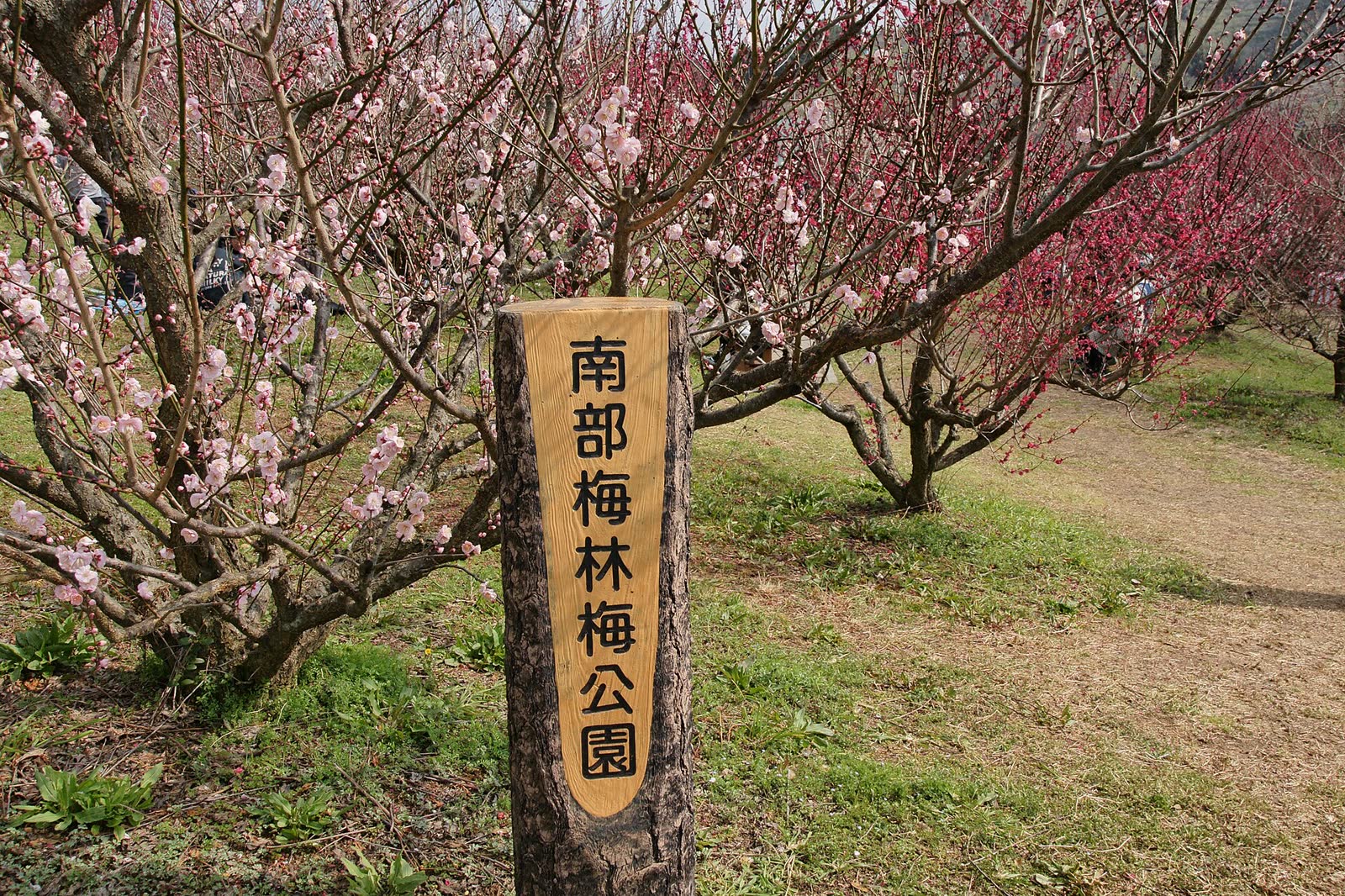
One of the three great plum groves of Nara Prefecture with Tsukigase and Ano, it has about 5,000 ume trees on roughly 25 hectares of the northern slope of Hirohashi Pass, with views over Mount Kongo, Mount Katsuragi and the Yamato Plain.
The "Bairin Manki course" recommended by Shimoichi Town runs from the Hirohashi-toge bus stop to Shimoichi Onsen Akitsuso, about 2.5 km one way and about 40 minutes on foot. From the "Tenshu no Mori" viewpoint, a climb of about 150 m from the bus stop (about 600 m one way, 15 minutes), you can see the whole grove. The Ume no Satoyama Matsuri is held on a Sunday in mid-March every year. It is about 20 minutes by Nara Kotsu bus from Shimoichiguchi Station on the Kintetsu Yoshino Line, but buses are infrequent.
→ More about Hirohashi Plum Grove (best time, access, map)
Soga Plum Grove (Odawara, Kanagawa): a guided walk around Soga
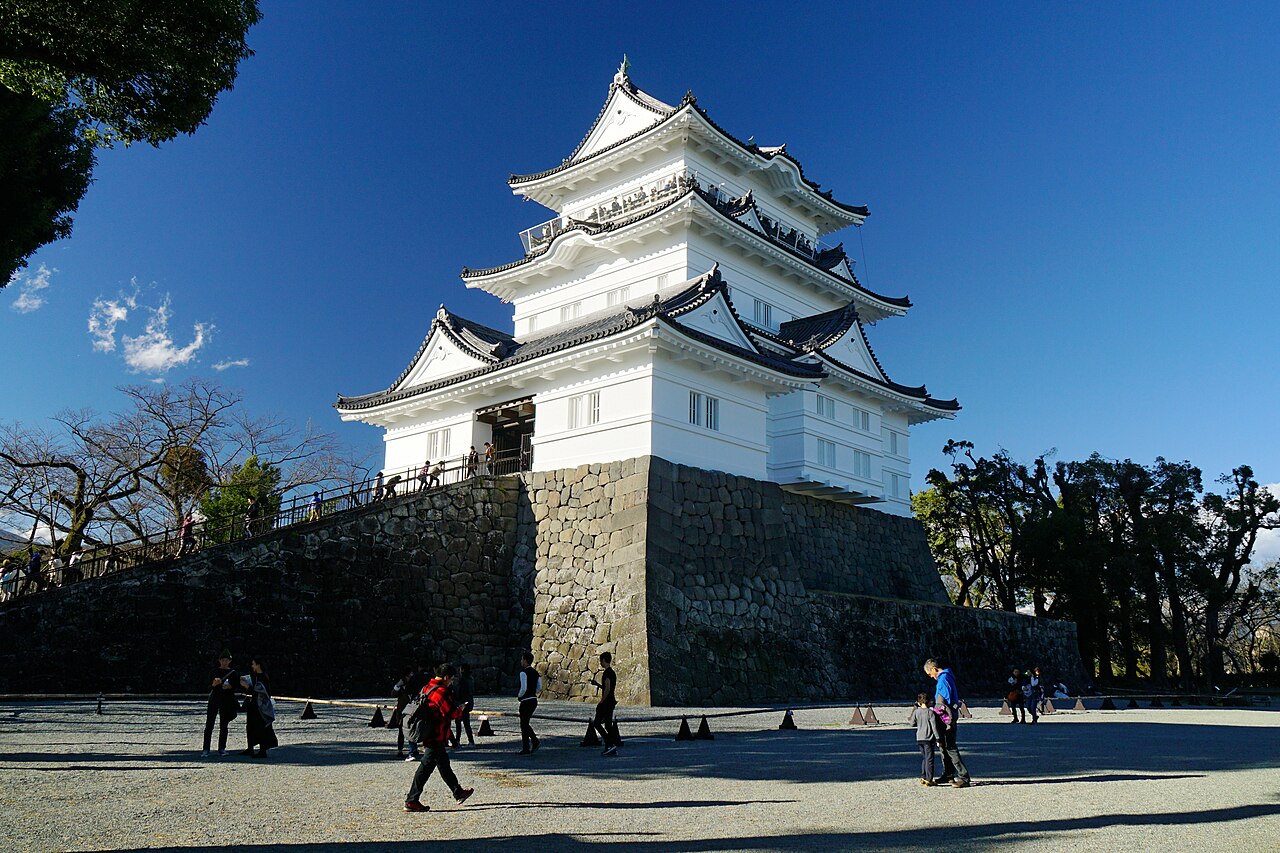
Soga Plum Grove, with about 35,000 ume trees, offers views of Mount Fuji on clear days. The central Bessho grove is about 10 minutes on foot from Shimo-Soga Station on the JR Gotemba Line. During the plum festival the Odawara Guide Association runs a "Soga no Sato hiking tour" that takes in other sights scattered around the area as well as the plums. A temporary bicycle rental opens near Odawara Station during the festival, so you can also tour by bike.
→ More about Soga Plum Grove (best time, access, map)
See also
Compare each spot's typical best time on the plum blossom calendar and festival dates on the plum festivals page. Spots you can visit on a day trip from Tokyo are listed in Plum Blossom Spots You Can Visit from Tokyo.