Skip to content
梅結び ume.jp

Umeboshi Chart

Types of Umeboshi: A Chart

Plain salted, shiso, honey, bonito and low-salt umeboshi compared on one chart: salt, sourness, sweetness, umami, and the size of the ume they are made from.

Taste map

Up and down is salt; left to right goes from ume and salt only to sweetness or umami added. Each point is a rough guide to the type; products differ.

Salted 18.2 g Seasoned 7.6 g Salt High Low ← Ume and salt only Sweetness / umami added → Shiraboshi Shiso Bonito Honey Low-salt
The lines are the salt equivalents in Japan's Standard Tables of Food Composition (per 100 g of edible part).

Type by type

A rough guide on a five-step scale. Products of the same type differ a lot, so check the salt equivalent (食塩相当量) on the package.

Shiraboshi (plain salted)

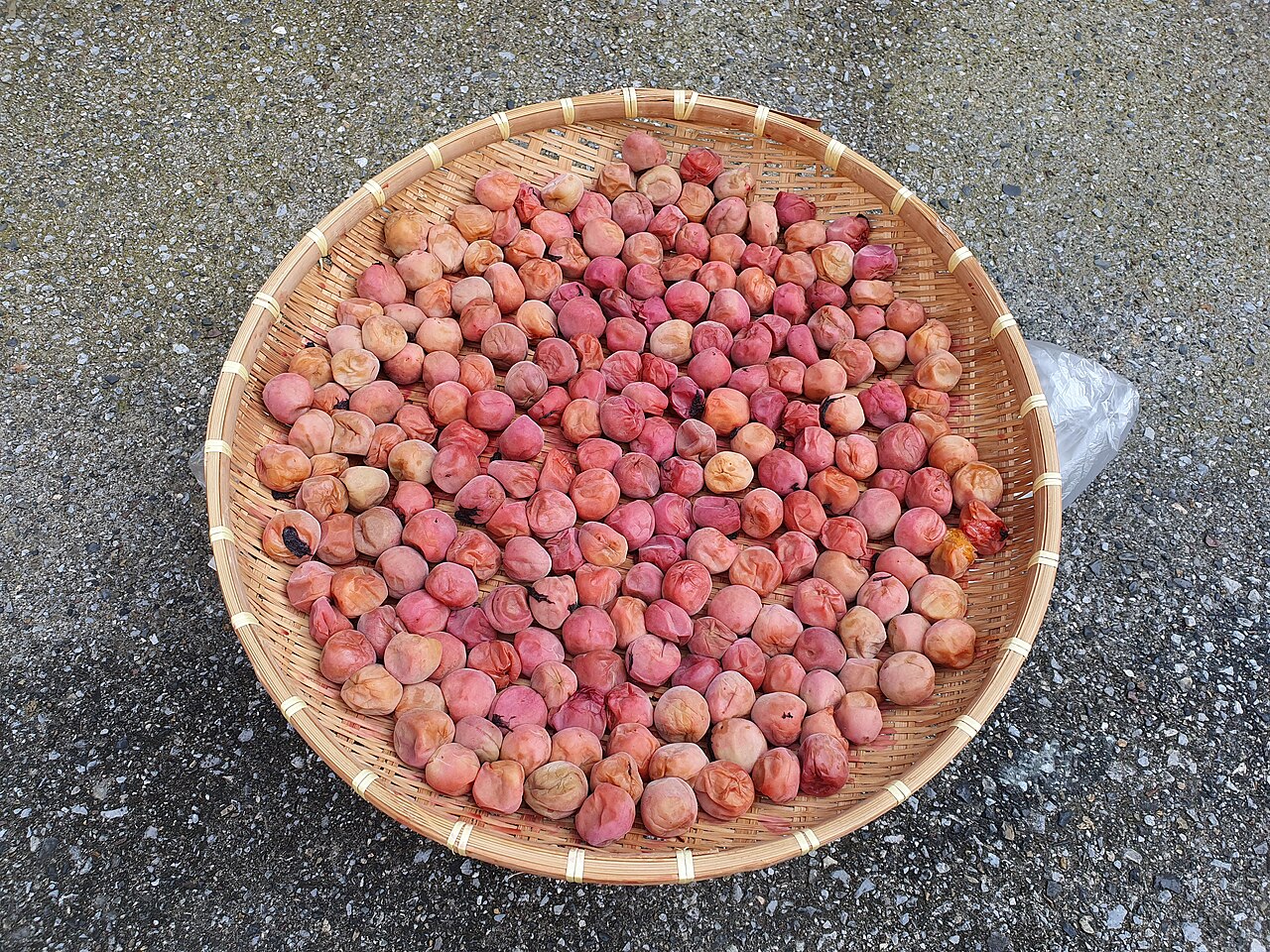
The traditional kind: ume pickled in salt only, then dried. The sourest and saltiest, and it keeps well.

Salt
●●●●●
Sourness
●●●●●
Sweetness
●●●●●
Umami
●●●●●

Name on the label: 梅干 (umeboshi)

Good for: Rice balls, seasoning dishes, tasting umeboshi as it was made for centuries
Shiso-zuke (with red shiso)

Red shiso leaves are added while pickling, giving a red colour and the shiso aroma. Most taste about as strong as shiraboshi.

Salt
●●●●●
Sourness
●●●●●
Sweetness
●●●●●
Umami
●●●●●

Name on the label: 梅干 (umeboshi)

Good for: Rice balls, chopped into dressed vegetables

Katsuo-ume (bonito)

Salted ume, partly desalted and steeped again in a liquid with bonito stock and other seasonings. Umami is added; salt and sourness are milder.

Salt
●●●●●
Sourness
●●●●●
Sweetness
●●●●●
Umami
●●●●●

Name on the label: 調味梅干 (seasoned umeboshi)

Good for: With rice, in lunch boxes

Hachimitsu-ume (honey)

Salted ume, partly desalted and steeped again in a liquid with honey and other seasonings. Sweet and mildly sour: easy to eat if you find umeboshi too strong.

Salt
●●●●●
Sourness
●●●●●
Sweetness
●●●●●
Umami
●●●●●

Name on the label: 調味梅干 (seasoned umeboshi)

Good for: Eating as they are; a first umeboshi

Do not give foods containing honey to babies under one year old.

Low-salt (genen)

Umeboshi with less salt, usually seasoned ones. The amount of salt varies a lot from product to product.

Salt
●●●●●
Sourness
●●●●●
Sweetness
●●●●●
Umami
●●●●●

Name on the label: 調味梅干 (seasoned umeboshi)

Good for: Cutting down on salt (ask your doctor if you have a condition)

How big the ume are

Ume varieties used for umeboshi and crunchy karikari-ume, smallest first. Circle sizes are a rough guide; see each variety's page for details.

Umeboshi made from small ume (koume) are labelled 小梅干 or 調味小梅干.

Read more

Sources of the figures

Explore more